Root Canal Treatment: Signs, Procedure, and Cost
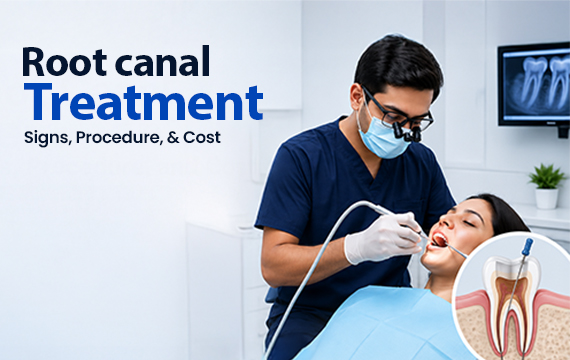
A root canal is a procedure for the treatment of a tooth that has been badly damaged by decay, infection or injury. It doesn’t remove the tooth, but the infected tissue in the tooth is cleaned out and the tooth is sealed and protected. If you are looking for root canal treatment in Delhi, you should know what symptoms are present, what kind of procedure is required and what factors affect the cost. In the dental chair, we hear “root canal” all the time. And the fact is that patients feel relief after the treatment takes away the pain that brought them in.
Why Might You Need a Root Canal?
Inside every tooth there is a soft tissue called pulp that is embedded in the tooth and is comprised of nerves and blood vessels to help the tooth grow and develop. Once fully formed, the tooth can survive without the pulp. The problem happens if that tissue gets infected or inflamed.
This can happen because of:
- Deep tooth decay
- Untreated cavities
- A cracked or fractured tooth
- Previous dental work that has weakened the tooth
- Injury or trauma to the tooth
A toothache of little or no force will tend to settle down on its own. Sometimes it seems to. Unfortunately, the infection usually doesn’t disappear. It simply goes on until symptoms are too much to ignore.
What Are the Signs That You May Need a Root Canal?
This is the most obvious answer: persistent tooth pain, sensitivity, swelling or pain while chewing are some of the most obvious warning signs. Your dentist may recommend root canal treatment if you notice:
- Constant or throbbing tooth pain
- Sensitivity to hot or cold foods and drinks that lingers
- Pain when biting or chewing
- Swollen, tender, or inflamed gums
- A tooth that appears darker than the surrounding teeth
- A small pimple-like bump on the gums that keeps returning
Not everyone experiences all of these symptoms. But in fact, some patients arrive with just a little discomfort and are surprised to learn that the infection has already reached the nerve of the tooth.
What Happens During a Root Canal Procedure?
One of the biggest misconceptions about root canal treatment is that it’s painful. That has changed with the advent of modern techniques and local anesthesia. Most patients describe it as similar to having a dental filling done.
Step 1: Examination and Diagnosis
The dentist does a thorough examination of the tooth, talks about your symptoms and will take digital X-rays when necessary. This helps to know how far the infection has spread and to see if the tooth can be saved.
Step 2: Removing the Infected Tissue
- After the area is numbed, a small opening is created in the tooth.
- The infected pulp is removed, and the root canals are carefully cleaned and disinfected.
- This is the point where the source of infection is eliminated.
Step 3: Filling and Sealing the Canals
The canals are then filled and sealed with biocompatible materials to reduce the risk of future bacterial contamination.
Step 4: Restoring the Tooth
- Many teeth require a dental crown after root canal treatment.
- This is particularly prevalent in the back teeth that bear most of the chewing force in our daily lives. The crown helps protect the treated tooth and allows it to function normally.
It’s not so much cleaning as restoring a damaged structure, so one can picture root canal treatment as restoring it. You want to keep your natural tooth when possible.
How Much Does Root Canal Treatment Cost in Delhi?
There is no fixed fee because each tooth is different.
Several factors influence treatment cost, including:
- The location of the tooth
- Number of root canals present
- Extent of infection or damage
- Diagnostic and treatment technology used
- Whether a dental crown is needed
- The experience of the treating dentist
A front tooth, for example, has fewer canals and is usually less complex than a molar. Molars usually require more clinical time and precision because they contain multiple canals that must be thoroughly cleaned. That is why two patients who undergo root canal treatment might be given different treatment estimates.
Why Is It Better Not to Delay Treatment?
Here’s something dentists see regularly.
A patient experiences pain for several days, then the pain suddenly disappears. They assume the problem has resolved. In reality, the nerve inside the tooth may have become severely damaged or died. The infection often remains active beneath the surface.
If treatment is postponed, complications may include:
- Dental abscess formation
- Infection spreading into surrounding tissues
- Bone loss around the tooth
- Increased treatment complexity
- Tooth extraction in severe cases
Early treatment is usually simpler, less invasive, and often more cost-effective than dealing with advanced infection later.
What Should You Look for in a Dental Clinic?
It’s not just about the dentist. It’s about communication and trust. A good dentistry team takes the time to describe what they’re looking at on the X-rays, talk about treatments and answer questions with no rushed action. People who come in to the hospital looking for the worst from the internet and get very clear diagnoses will have less anxiety long before treatment has commenced. Matrix Dental & Skin Lounge has a high focus on accurate diagnosis, modern treatment protocols and patient assessment, so that patients can better understand exactly what is happening with their teeth before any treatment starts.
Summary
| Topic | Key Takeaway |
| Main Purpose | Save an infected or damaged natural tooth |
| Common Symptoms | Tooth pain, sensitivity, swelling, pain while chewing |
| Procedure | Remove infected pulp, clean canals, seal the tooth |
| Cost Factors | Tooth type, complexity, crown requirement, dentist’s expertise |
| Early Treatment Advantage | Helps prevent infection-related complications and tooth loss |
If you are exploring best root canal treatment in Delhi, schedule an evaluation as soon as symptoms appear. In many cases, acting early can mean the difference between saving a natural tooth and losing it altogether.
FAQ
Recent Posts


This is why we do, what we do!


ROBERT
A dental tourism patient shared how his process of treatment was seamless with the help of the highly experienced and considerate doctors of matrix dental and skin lounge. He has full faith on the doctors and can rely on them for all skin and dental treatments in future. He recommends everyone to avail the services of matrix dental and skin lounge.